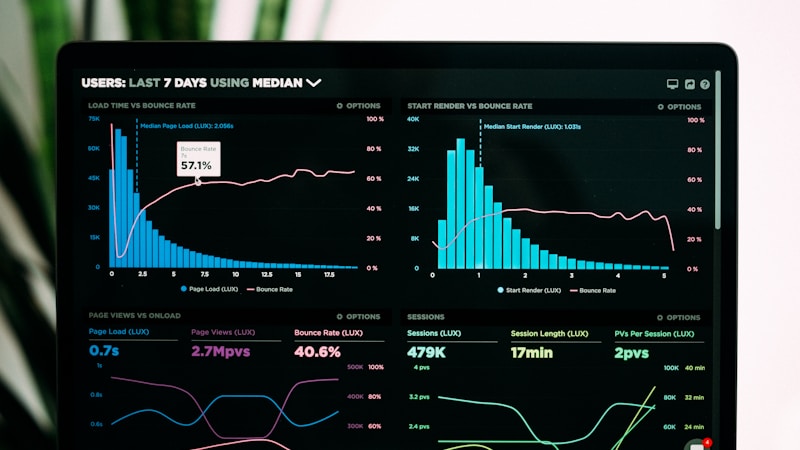
Data Without Analysis Is Just Storage Cost. AI Analytics Makes Data Actionable.
Businesses collect more data than ever — 2.5 quintillion bytes daily according to IBM — but only 32% of this data is analyzed effectively. AI-powered analytics changes this by automating data processing, pattern recognition, and insight generation. By 2026, the AI analytics market has reached $120 billion according to Allied Market Research. Companies using AI analytics report 3-5x faster insight generation and 20-30% improvement in decision-making accuracy compared to traditional analytics approaches.
At x13apps, we implement AI analytics solutions that turn raw data into competitive advantage. Here is our approach.
From Descriptive to Predictive Analytics
Traditional analytics answers what happened. AI analytics answers what will happen and what should be done about it. Descriptive analytics (dashboards, reports) shows historical data. Diagnostic analytics (drill-down, correlation analysis) explains why something happened. Predictive analytics (machine learning models) forecasts what will happen based on historical patterns. Prescriptive analytics (optimization algorithms) recommends specific actions to achieve desired outcomes. Most businesses operate at the descriptive level. AI enables progression through diagnostic, predictive, and prescriptive levels.
Start with predictive analytics for high-impact business questions: customer churn prediction (which customers are likely to leave in the next 30 days), demand forecasting (what inventory levels to maintain for each product), revenue prediction (what revenue to expect next quarter), fraud detection (which transactions are potentially fraudulent), and lead scoring (which prospects are most likely to convert). Each of these predictions enables proactive business decisions rather than reactive responses to problems.
Implementing AI Analytics Tools
Choose analytics tools based on your technical maturity. Entry level: Google Analytics 4 with AI-powered insights and anomaly detection. Mid level: AI-enhanced BI platforms like Tableau with Einstein Discovery, Power BI with Azure AI, and Looker with LookML. These tools provide natural language querying, automated insight generation, and predictive modeling without requiring data science expertise. Enterprise level: custom machine learning models using Python (scikit-learn, TensorFlow) or cloud ML services (AWS SageMaker, Google Vertex AI, Azure Machine Learning) for proprietary analytics needs.
Data quality is the foundation of AI analytics. Implement data governance before deploying AI: standardize data formats, eliminate duplicate records, validate data accuracy, and establish data ownership. Poor data quality leads to poor AI predictions regardless of model sophistication. Invest 40% of analytics budget in data preparation and governance according to Gartner. The remaining 60% goes to tools and implementation. Monitor model performance monthly: accuracy, precision, recall, and business impact. Retrain models as data patterns shift.
Building a Data-Driven Culture
AI analytics tools are only valuable if people use them to make decisions. Build a data-driven culture by: making analytics accessible (dashboards, self-service tools), connecting analytics to business outcomes (show how data-driven decisions improved results), celebrating data wins (share examples of analytics-driven successes), and training team members in data literacy (understanding basic statistics, interpreting visualizations, asking data-informed questions). Organizations with strong data cultures are 3x more likely to report significant business improvements from their analytics investments according to a 2025 NewVantage Partners survey.
Start with a single high-impact use case to demonstrate value. Customer churn prediction is often the best starting point because the ROI is clear: reducing churn by 5% can increase profits by 25-95% according to Bain & Company. At x13apps, we build AI analytics solutions that drive measurable business outcomes. For more, read our data-driven decision making guide.