Technical SEO Is the Foundation Your Content Rests On.
Even the best content will not rank if search engines cannot find, crawl, and index your pages properly. Technical SEO ensures your site is accessible and understandable to search engines. According to a 2025 Semrush study, 43% of websites have technical SEO issues that negatively impact their rankings. Most of these issues take less than an hour to fix.
This checklist covers the 15 most important technical SEO factors we check for every client at x13apps. Run through it monthly — technical SEO is not a one-time task but ongoing maintenance that directly impacts your search visibility.
Crawlability: Can Search Engines Find Your Pages?
Check that search engines can access your site. Review your robots.txt file to ensure it is not accidentally blocking important pages. Submit an XML sitemap to Google Search Console and Bing Webmaster Tools. Fix internal broken links using tools like Screaming Frog or Ahrefs. Ensure important pages are not blocked by noindex tags — a common issue after site migrations.
Google's crawl budget is limited, especially for larger sites. Every broken link or blocked page wastes crawl budget that could be spent on indexing your valuable content. Use Google Search Console's Coverage report to identify crawl errors and fix them promptly.
Indexing: Which Pages Are Actually in Google?
Verify which pages are indexed by searching "site:yourdomain.com" on Google. Remove thin or duplicate content from the index by either improving it or adding a noindex tag. Use canonical tags to prevent duplicate content issues caused by URL parameters, printer-friendly versions, or www vs non-www variations. A canonical tag tells Google which version of a page is the authoritative one.
Large e-commerce sites with faceted navigation (filtering by size, color, price) often generate thousands of near-duplicate URLs. Implement proper canonicalization or use robots.txt to block parameter-heavy URLs. Without this, crawlers waste resources on duplicates instead of discovering new product pages.
Core Web Vitals: Google's Performance Benchmark
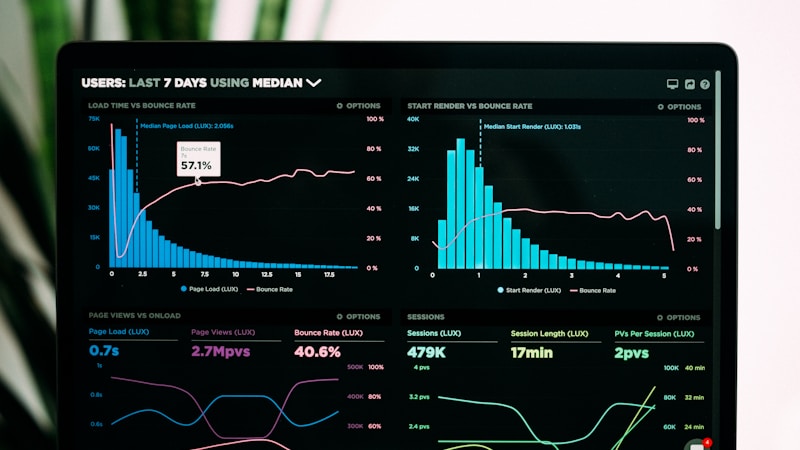
Google measures three specific performance metrics. Largest Contentful Paint (LCP) measures loading performance — target under 2.5 seconds. Interaction to Next Paint (INP) measures interactivity — target under 200 milliseconds. Cumulative Layout Shift (CLS) measures visual stability — target under 0.1. A 2025 study by Google found that sites meeting all three thresholds see 24% lower bounce rates.
Common fixes include optimizing images, removing render-blocking JavaScript, using a CDN, and ensuring proper size attributes on images and embeds. The most impactful single change is usually image optimization — properly compressed images alone can improve LCP by 30-50%.
Mobile Friendliness and HTTPS
Google uses mobile-first indexing, meaning the mobile version of your site determines your rankings. Test your site with Google's Mobile-Friendly Test tool. Common mobile issues include text too small to read, touch targets too close together, and content wider than the screen. Every page must perform flawlessly on mobile devices.
HTTPS is non-negotiable. Google confirmed HTTPS as a ranking factor in 2014, and modern browsers actively warn users on non-HTTPS sites. Ensure all pages redirect from HTTP to HTTPS, that your SSL certificate is valid, and that mixed content (HTTP resources loaded on an HTTPS page) is fixed.
Site Speed: Every Millisecond Counts
Compress images, enable browser caching, minify CSS and JavaScript, and use a CDN. According to Google, a one-second delay in mobile load time can reduce conversions by up to 20%. For a site earning $100,000 per day, that is $730,000 in lost revenue per year. Use tools like PageSpeed Insights, GTmetrix, and WebPageTest to identify speed bottlenecks.
Server response time (Time to First Byte) should be under 800 milliseconds. If your TTFB is higher, consider upgrading your hosting, using a faster DNS provider, or implementing a caching solution like Redis or Varnish. Technical SEO is the foundation every other optimization depends on — at x13apps, we include a full technical audit with every SEO engagement.